Carpe Diem – Creating Learning Futures Through Agile Collaborative Design

15 October – 17 October 2014

We are continuing our short seminar with Professor Gilly Salmon, which started 15 October and runs until 17 October. During these three days Professor Salmon will take us through the Carpe Diem model for course creation. To be a part of this, please start by accessing the seminar landing page to view the resources made available. Then please take part in the conversation in the seminar discussion forum; to add your thoughts, questions and comments please sign in to our live site first. If you are not registered yet, this can be done by choosing Register at the top of the page. During the seminar we will be providing regular e-mail summaries and other useful information. If you have already signed up using the form below we already have your e-mail address, if not we invite you to do this as soon as possible. We are looking forward to your engagement!

A big thank you to those of you, who were able to join us Friday 17 October for the one hour live session with Professor Gilly Salmon. In case you missed this session the recording is now available here.

Academic staff in Higher Education need to transform their teaching practices to support more future-oriented, digital, student-centered learning. Promoting, enabling and implementing these changes urgently requires acceptable, meaningful and effective staff development for academics. We identify four key areas that are presenting as barriers to the implementation of successful staff development. We illuminate the Carpe Diem learning design workshop process and illustrate its impact on academic staff as a viable, constructive alternative to traditional staff development processes. The Carpe Diem model directly exposes and addresses the irony that educational institutions expect their academic staff to learn to design and deliver personalized, mobile and technology-enhanced learning to students, whilst wedded to ‘one size fits all’ face-to-face interventions…or worse, ‘page turning’ e-learning that masquerades as staff development. To avoid further frustrations and expensive, inappropriate initiatives, the spirit and practice of Carpe Diem could act as a ‘pathfinder beacon’, and be more widely adopted to enable fast, effective and fully embedded, learner-ready, future-proofed learning.

Professor Gilly Salmon has been a digital learning innovator for more than 20 years . She was the founding director of All Things In Moderation, in 2001.She was appointed Pro Vice-Chancellor of Learning Transformations at Swinburne University of Technology, Melbourne, Australia and has recently taken up a new appointment as Pro Vice-Chancellor (Education Innovation) at the University of Western Australia. Professor Salmon is well-known in the learning design community, particularly for her Carpe Diem learning design method. She holds a PhD from Open University, United Kingdom and an M.Phil. from Cranefield University, United Kingdom.


Seminar: Learning Design in the African Context: Technology and Instructional Design Considerations last day

6 October – 10 October 2014

This seminar is coming to end today, however the seminar landing page is still available. Access to view a presentation by Wanjira Kinuthia and a presentation by Dr. Perien Boer and visit our discussion forum.

Thank you to those of you who took part in the live meeting on 8 October. The recording of this session is available here and has been added as a resource to the landing page.

ICTs and the significant growth in internet usage thoughout the African continent has over the past decade opened up for many opportunities for ICT supported course design. However, challenges still remain when using technology for course design. What are these and more importantly how can they be overcome or at least mitigated? During this one-week seminar these and other issues will be raised. This seminar will start 6 October and end 10 October and will be presented by Associate Professor Wanjira Kinuthia from the Learning Technologies Division at Georgia State University, Atlanta, United States and Lecturer in Educational Technology Dr. Perien Joniell Boer from the University of Namibia.
During this week Wanjira and Perien will discuss and open up for a debate on what constitutes good learning design, using educational technologies. Among the topics will be how we create courses and use technologies effectively in African contexts, where we are often faced with severe technical limitations. Moreover, how do we implement and use technologies in a context where educational needs are much more different and urgent compared to other areas in the world, such as e.g. the US and Europe. These include considerations for Open Educational Resources (OER) and Mobile Learning solutions in higher education and how to engage both learners and instructors.
Together with our two presenters we are inviting you to take part in this conversation to share your experiences and learn more about the challenges faced by educators located at the African continent from a learning design perspective.


Wanjira Kinuthia is an associate professor of learning technologies at Georgia State University. Prior to that, she worked as an instructional designer in higher education and business and industry for several years.
Wanjira has a special interest in international and comparative education, with a focus on sociocultural perspectives of instructional design and technology. Her research focuses on educational technology in developing countries, looking at how information and communication technology (ICT) is infused into instructional setting.
Recent projects have included the role of Open Educational Resources (OER) and Mobile Technologies in bridging the digital and knowledge divide. She has edited several books and published articles based on her work in these areas.
Dr. Perien Joniell Boer is a Lecturer in educational technology at the Faculty of Education at the University of Namibia. Dr. Boer has researched and published about educational technologies and integration nationally in Namibia and also the relations between pedagogies and ICT usage in education.


Seminar: Wrapping MOOCs for students in the global south – last day

Online seminar 29 September – 1 October 2014

Presenters: Donnalee Donaldson from Kepler Kigali and Shanali Govender from the Centre for Innovation in Learning and Teaching, University of Cape Town.

This seminar is ending today, but please come and join us. Start by viewing our seminar landing page, where we are currently hosting two narrated PowerPoint presentations by our presenters. Please also visit our discussion forum for this seminar and add your views. To post, please register on our e/merge Africa live site (free of charge and if you haven’t already done this), then sign in and look for the short cut to the discussion forum under Forum.

If you would like to receive daily updates via e-mail, please use the sign up form below.

Thank you to all who took part in yesterday’s live session with Donnalee Donaldson and Shanali Govender. In case you missed this session, the recording is available here

Initially touted as cheaper, offering better learning opportunities than traditional classes, and possibly the death of traditional higher education institutions, Massive Open Online Courses (MOOCs) generated such interest that Time Magazine labelled 2012 “The Year of the MOOC”. Since then, with more substantial research on MOOCs being undertaken, and a degree of disillusionment from the initial proponents of MOOCs, the buzz has subsided enough for us to ask ourselves some key questions about MOOCs.
Questions about MOOCs range from sweeping questions about their impact on higher education, to narrowly focused concerns about student honesty online. Underlying many of the questions asked of MOOCs are pedagogical concerns about whether we are teaching in ways that support learning for students. A prime question from the global South perspective, is how can we can best make use in our very different contexts of the resources and materials that have been made available online at no charge to the user by MOOCs mostly developed in the global North .
In conversation, from different parts of Africa, Donnalee Donaldson from Kepler Kigali, Rwanda and Shanali Govender from University of Cape Town, South Africa will present and lead discussion about their experiences of wrapping as one way of working with MOOCs.

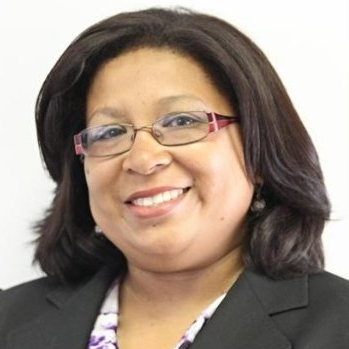
Donnalee Donaldson is a higher education administrator, instructor, and lawyer, who is interested in harnessing the power of technology to eliminate disparities in access to education. Her current focus is developing sound admissions strategies and culturally relevant instructional design at Kepler Kigali – Rwanda’s first blended learning university.
Donnalee is committed to a career in social justice and has a strong track record in the fields of education, public health, and criminal justice.She has excelled at working in the nonprofit and government sectors. She is also a gifted writer and public speaker. She has written for media outlets in the USA and Jamaica. She has been requested to speak, write, and facilitate discussions about matters related to higher education, law school admissions, legal careers and diversity. Donnalee is a proud Jamaican and global citizen.
Shanali Govender Although Shanali’s teaching experience began in secondary education, a return to higher education to pursue her own studies prompted a shift to an interest in the higher education landscape. While continuing to work in the field of staff development at the University of Cape Town, she is working towards her PhD, looking at discourses in the learning experiences of first year engineering students. Her particular brief in the staff development team is to support part-time and non-permanent teaching staff. She is responsible for running the s.e.a.TEACH (supporting emerging academics Teach) programme and works within departments and faculties on request. She has also facilitated a number of wrapped MOOCs, targeting UCT postgraduate students.