Intellectual Property Rights: Implications and Best Practices for Elearning Practitioners.

Monday 6 June – Friday 10 June 2016

eLearning and Intellectual Property Rights: Implications and Best Practices for Elearning Practitioners.

Thank you to all who took part in Monday’s webinar! Adobe Connect recording is available here. View resources and join the conversation on this topic by visiting the seminar landing page

Join us for this seminar on intellectual property rights and the role of policies regulating these. This seminar is lead by Carnegie Diaspora Fellow Dr. Jasmine Renner from East-Tennessee University, United States. Dr. Renner will start with a webinar on Monday 6 June at 3 pm (SAST) where she will be joined by Dr. Glenda Cox (Research on Open Educational Resources for Development – ROER4D, University of Cape Town, South Africa). and continue the conversation in a discussion forum during the rest of the week. Sign up below to join!

Summary:

eLearning practitioners are increasingly creating educational materials that are offered on a wide scale, globally. With this dynamic frontier, emerge questions and concerns about intellectual property rights among content developers and providers. Questions such as who owns the digital materials and content that I create and post online? What are institutional or organizational limits of ownership to my e-materials and digital products? Can I patent my work and what are organizational implications? Do I have the right to use content for eLearning courses that is easily downloadable and found on the worldwide web at another organization? This webinar addresses intellectual property rights questions related to the content and development of eLearning educational materials and discusses its implications for practitioners, students and institutions or organizations. Please sign up here:

This seminar has ended – for resources please see seminar landing page

Dr. Jasmine Renner is an international speaker, author, lecturer. educator and consultant for governments and civil societies. She was appointed a 2015 Carnegie Africa Disapora Fellow by the Carnegie Corporation of New York and a Fulbright Specialist Scholar by the J. William Fulbright Foreign Scholarship Board (FSB). The Fulbright Specialist scholar award is funded by the U.S. Department of State Bureau of Educational and Cultural Affairs. The Carnegie Africa Disapora Fellow award is funded by the Carnegie Corporation of New York and administered by the Institute of International Education in partnership with Quinnipiac University in New York. She is currently a tenured Professor in the Department of Educational Leadership and Policy Analysis at East Tennessee State University.

eLearning Africa report back


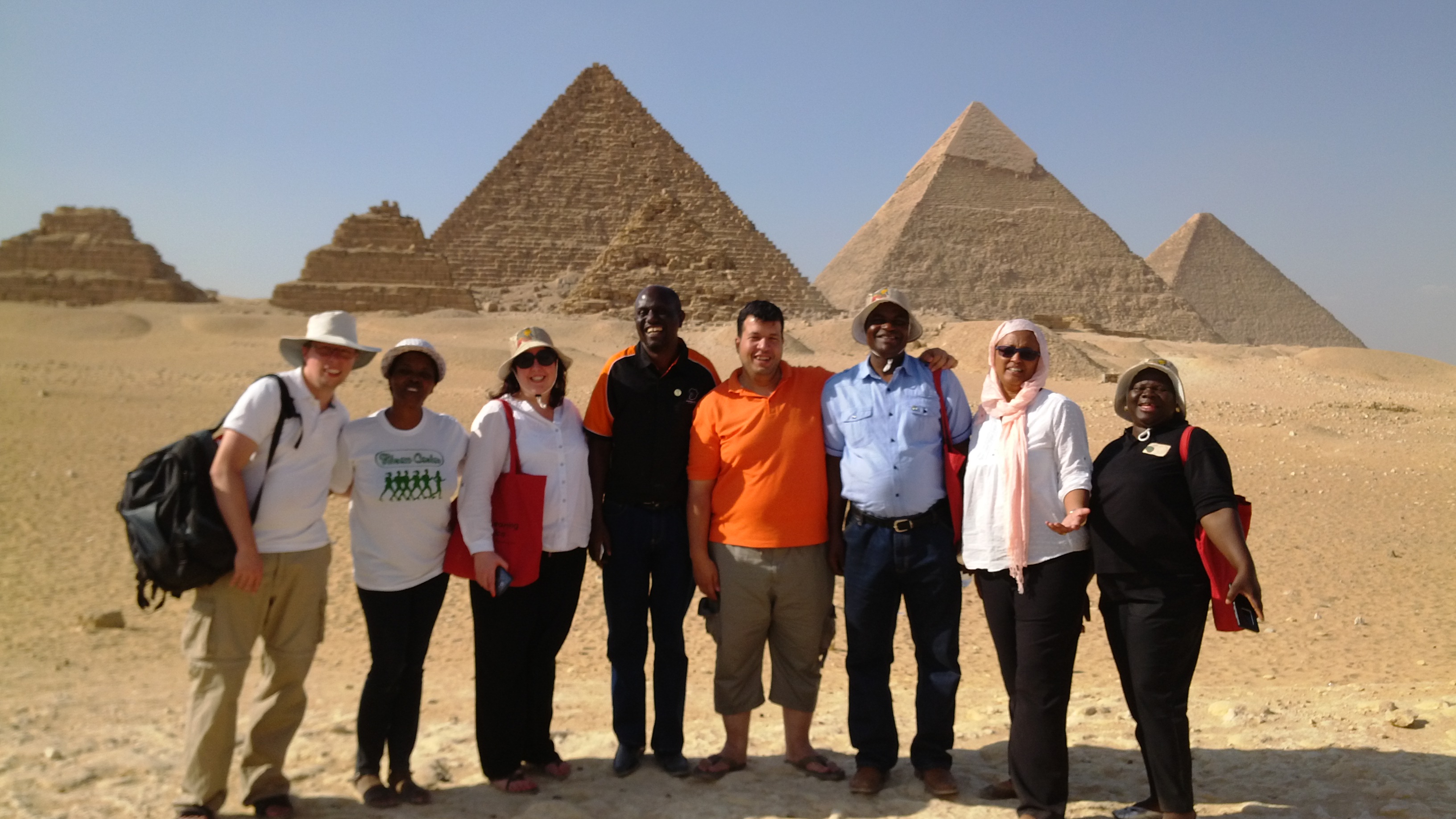
The e/merge Africa team has returned after an exciting week in Egypt, attending the annual eLearning Africa conference. We learned a lot, we connected a lot and had many great experiences we would like to share! Today Wednesday 1 June 2016 we hosted a one hour webinar sharing the team’s views and impressions of the conference. Recording is available here

10 Essential Ingredients for an Effective eMentoring Design Plan

Monday 16 May – Friday 20 May 2016 

Join us from 16 May to 20 May 2016 when Dr. Penina Lam is hosting “10 Essential Ingredients for an Effective eMentoring Design Plan”. View Monday’s webinar here, then proceed to our seminar landing page here to view more resources and take part in the conversation in the discussion forum.

Objectives: By the end of this Webinar, the participants will be able to:
• Evaluate the benefits associated with virtual mentoring and fit for their audience(s)
• Describe the 10 essential ingredients for designing an effective eMentoring plan
• Choose to engage in facilitated sessions following the Webinar and apply lessons learned
Abstract. Virtual mentoring (eMentoring) offers an unprecedented pathway to accessing a rich pool of global talent and expertise who can enrich in-class and out-of-class learning experiences. It holds great promise for mentors and mentees; for individuals, schools and workplaces. eMentoring applications presents opportunities for mentoring pairs or teams who can now meet and communicate from virtually anywhere around the globe! eMentoring can introduce a valuable blend to the educator’s took kit enabling the engagement of diverse learning stakeholders and utilizing readily available technologies.

Mentoring is useful as a learning approach for all ages and levels of experience that has been shown to have tremendous benefits for those who engage. Mentoring helps develop confidence, key competencies, and networking resources particularly vital for today’s competitive workplace. Virtual mentoring is not just about the technology that is used but about the people relationships and strategy to develop a sound initiative.

The participants will evaluate the promise of these mobile- and Web-based applications and how mentorship can be designed for maximum impact. This Webinar will focus on these foundations of eMentoring to provide educators with ideas on design principles, tools, and tips for implementation.

The Webinar session will be interactive, featuring live polls and chats with the featured speaker. Following the live session, the participants will engage with a facilitator for deeper reflection activities.

Dr. Penina Lam is the CEO of eLearning Innovators, Inc. She is also the Online Instructional Design Consultant for the World Bank’s Gateway Academy.
She co-directs the annual eLearning Innovations Conference & Expo (ELICE), reaching thousands of educators, leaders, and innovators.
She’s passionate about learning and organizational development. As a learning solutions consultant and coach, she works internationally to support organizations with accessible, efficient, and quality multi-media learning options. She is an early adopter of eLearning and since 2001, she’s been involved in the design, facilitation, and evaluation of dozens of online and blended courses.
Penina holds a Ph.D. in Educational Leadership and Organizational Development (OD) from the University of Louisville (USA); a master’s in higher education; and a bachelor’s degree from Kenyatta University (B.Ed. Hon).  She served in senior leadership roles in higher education and corporate sectors. She has served as faculty at the University of Arkansas (USA); Queen’s University (Canada) and the Kenya Utalii College.
Penina is a member of Rotary International. She serves on several non-profit Boards. She authored Virtual Mentoring (2015) and co-authored The Management of Adult Education Organizations in Africa (2011), published by the UNESCO Institute of Education & Pearson.