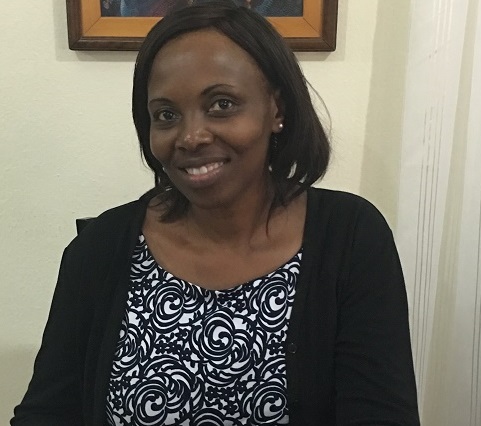
Presenter: Dr. Tonia A. Dousay, University of Wyoming, United States, Robert Maribe Branch, University of Georgia, United States
Format: Asynchronous discussion from 30 January – 3 February + Live online meeting on Monday 30 January (14:00 Abuja time/ 15:00 Cape Town time/ 16:00 Nairobi time).
Survey of Instructional Design (ID) Models offers a framework for adopting or adapting (ID) models for use in curriculum, courses, and training development. Teaching and learning paradigms in conjunction with how technology influences instructional delivery, the authors help readers consider the inherent value in matching ID with a corresponding context. Thus, effective ID models, and therefore the designs themselves, must be responsive to different educational contexts. This webinar will help practicing IDs in the following areas:
- Distinguish between the process of instructional design and specific models
- Describe the different ways in which instruction is systematically designed
- Identify other philosophical approaches to designing instruction; cyclical, layered, etc.
- Visualize the processes commonly used to design instruction
- Discuss future implications for instructional design
 Robert Maribe Branch, Ed.D., is a professor of Learning, Design, and Technology at the University of Georgia and the head of the Department of Career and Information Studies. Rob taught secondary school in Botswana as a Peace Corps volunteer and later joined the University of Botswana as a lecturer in the Technology Education Department. Branch worked as Fulbright lecturer/researcher at the University of KwaZulu-Natal in South Africa, conducting research on the complexities of intentional learning spaces. Branch taught graduate courses and conducted research at Syracuse University prior to relocating to Athens. Branch edits the Educational Media and Technology Yearbook and published Instructional Design: The ADDIE Approach. Branch’s published research focuses on diagramming complex conceptual relationships and other complicated flow processes. He is a past Dousay received the 2015 AECT-IAP Distance Education Best Practices Award, the 2014 Mary Garland Early Career Fellowship Award from the University of Wyoming, and the 2013 AECT-MPD Immersive president of the Association for Educational Communications and Technology.
 Tonia A. Dousay, Ph.D., is an assistant professor of Instructional Technology at the University of Wyoming with fifteen years of instructional design and project management experience. Tonia’s teaching and research focus on design-based learning activities and the knowledge and skills acquired and reinforced through these opportunities, both in face-to-face and online classrooms. Learning Award. She is an active member of the Association for Educational Communications and Technology and can be contacted at [email protected] or on Twitter at @tadousay
This seminar has ended. Please view seminar resources and landing page here