e/merge Africa is collaborating with Designers for Learning to contribute a #YearOfOpen event to the global calendar of #YearOfOpen events.
Presenters:
- Dr. Jennifer Maddrell, Founder and President, Designers for Learning, United States
- Dr. John Baaki, Assistant Professor, College of Education, Old Dominion University, United States
- Dr. Jerome Terpase Dooga, University of Jos, Nigeria
Format: Asynchronous discussion from 27 February – 3 March + Live online meeting on Monday 27 February (14:00 Abuja time/ 15:00 Cape Town time/ 16:00 Nairobi time / 7:00 Chicago U.S. time). Second live online meeting to be announced
The Open Education Consortium (OEC) has announced the launch of the #YearOfOpen to celebrate the positive impacts that open practices have brought to education, government, research and business. In education, the Year of Open marks significant milestones for the Open Education Movement worldwide, including:
- 15 years ago the term “Open Educational Resources” was created, the Budapest Open Access Initiative was launched, and the first Creative Commons licenses were released;
- 10 years ago the Cape Town Open Education Declaration was written;
- 5 years ago the first Open Education Week took place and the first OER World Congress was held, resulting in the Paris OER Declaration.
What goes into revising, evaluating and localising OERs?
- In the first live meeting on 27 February Dr Jennifer Maddrell and Dr John Baaki will introduce us to an instructional evaluation process that practitioners can use for revising OERs.
- In the second live meeting (details to be announced) , Dr Jerome Dooga will share his experiences of revising and evaluating OERs in Nigeria and discusses challenges, successes and lessons learnt.
Designers for Learning also invites e/merge Africa members to join their instructional design MOOC. The mission of Designers for Learning is to connect college students and other volunteers interested in gaining instructional design experience with service-learning projects to design and develop OER for underserved needs. Designers for Learning service-learning projects have involved over 3,000 volunteers, including college students, their faculty sponsors, and other subject-matter experts. Since 2014, volunteer service-learners have designed and developed OER for adult basic education programs to support learners with low literacy and math skills that are made available for free to adult educators and learners in the Adult Learning Zone group on OER Commons. Our upcoming project-based MOOC engages course participants in a design cycle that involves the evaluation and redesign of adult basic education OER created to date in our prior design courses, and is a perfect opportunity for college students looking to gain real-world experience or faculty and other educators wanting to share their expertise to an important underserved need.
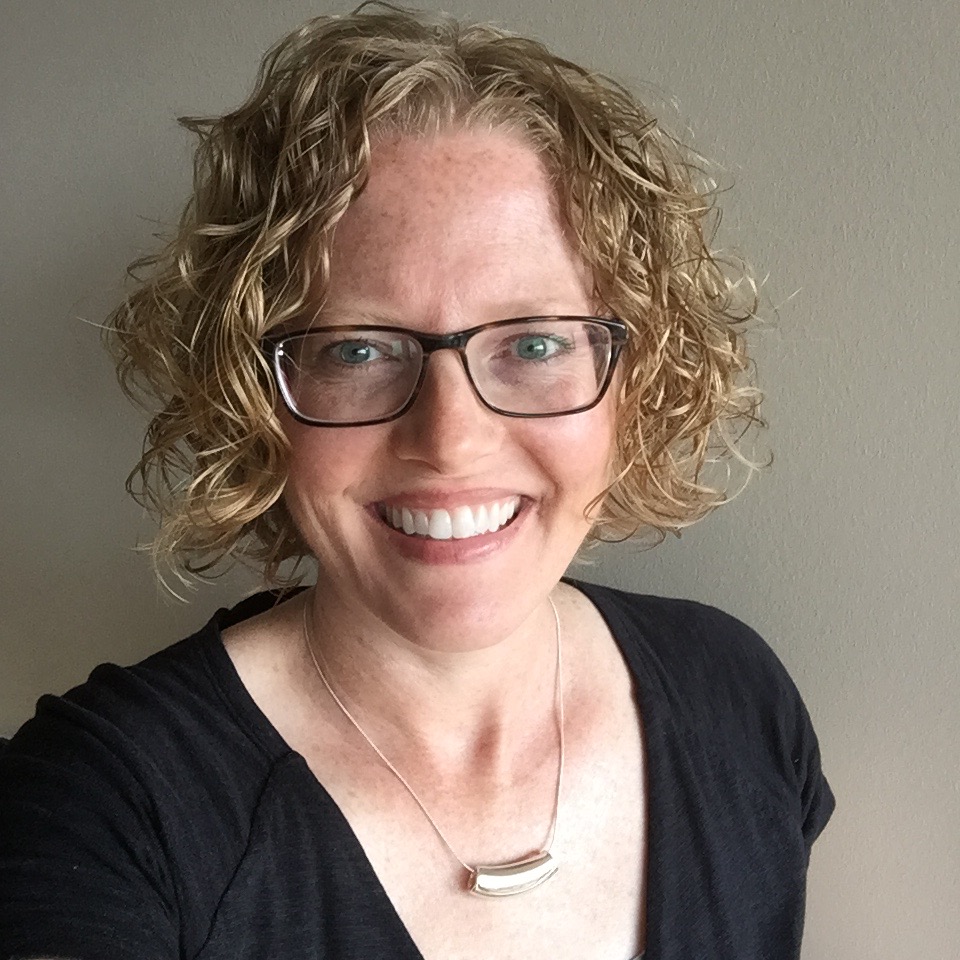 Jennifer Maddrell is the founder of Designers for Learning, a nonprofit in the United States that facilitates service-learning opportunities to support underserved educational needs. Jennifer completed her Ph.D. in the Instructional Design and Technology program at Old Dominion University where she was awarded a dissertation fellowship to complete this research, and served as an adjunct Assistant Professor.
 John Baaki is an Assistant Professor in the College of Education at Old Dominion University in Norfolk, Virginia in the United States. John completed his Ph.D. in Instructional Technology at Wayne State University, and has served as a volunteer with Designers for Learning since 2015 serving as a course designer and facilitator.
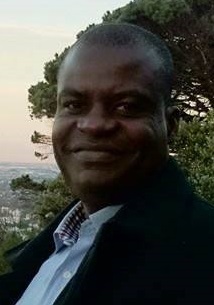 Dr. Jerome Dooga is an Lecturer,Department of English, Faculty of Arts, University of Jos, Nigeria.
He is also the e/merge Africa Regional Coordinator for West Africa and Commonwealth of Learning (COL) eLearning consultant to the School of Education at the National Open University of Nigeria (NOUN). Jerome holds a PhD in English and has received postgraduate training in Educational Technology at the University of Cape Town. He has presented research papers at various fora in a range of African countries including a number of conferences. He has published widely in the field and is co-author and editor of a new book on technology in African Higher Ed.
This seminar has ended. Please view seminar resources here
View webinar recording below or access our full playlist on Open Data & Open Educational Resources on our YouTube channel: