10 – 13 April: Agricultural Indigenous Knowledge (AIK) as OER: AgShare II

Presenter: Maxwell Omwenga, University of Tennessee at Chattanooga, United States & Makerere University, Uganda

Format: Asynchronous discussion from 10 April – 13 April + Live online meeting on Monday 10 April at 2 pm
Time converter at worldtimebuddy.com

How can researchers and communities collaborate to create and disseminate high quality OERs?

AgShare is a collaboration between existing organizations. It is an alignment initiative to leverage the attention of existing organizations in various domains to create and openly share different types of OER that strengthen MSc agriculture faculty and curriculum and create downstream uses of the OER for other stakeholders. The AgShare methodology consists of using a research-based approach for the co-creation and release/sharing of purposeful agricultural knowledge within and across stakeholder groups. It  is a scalable and sustainable  serving to fill  critical gaps in agriculture related curriculum. Graduate students engage in participatory action  research connecting them to communities and smallholders and through rigorous research practices, they collaborate to produce high quality, peer-reviewed research, case studies and extension materials for disseminating widely to the relevant stakeholders.  

The College of Computing and Information Sciences (CoCIS) together with College of  Agriculture and Environmental Studied (CAES) both from Makerere University,  embarked on a collaborative research project whose aim was to investigate the forms of Agricultural Indigenous Knowledge used by different groups of farmers. Findings reveal that despite the advent of modern farming methods, many small scale farmers continue to embrace indigenous farming knowledge for managing soil fertility, controlling pests and diseases, controlling weeds, soil preparation, planting materials, harvesting and storage of indigenous root crops and animals.

The research project sought to establish the existing methods of documenting and disseminating such AIK, investigate the constraints of documenting and disseminating AIK, and determine the best strategies for documenting and disseminating of AIK as Open Educational Resources (OERs), so as to contribute to sustainable food security efforts in Soroti, Hoima and Masaka Districts in Uganda.

An AgShare Quality Assurance Toolkit was developed as part of the AgShare Project and is available at: (http://www.oerafrica.org/system/files/12155/agshare-toolkit-finalopt.pdf?file=1&type=node&id=12155). In it are resources supporting the development of open, high quality, localized content and research that follows best practices. The Toolkit provides resources and quality assurance processes which can be used to ensure that the open outputs developed for research and farm communities will follow best practices. This resource may provide inspiration to colleagues involved in similar initiatives in other disciplines.

Other open outputs from the project include an open online database that was developed using Agri-Drupal, to enhance access and exchange of information on agricultural indigenous knowledge. http://agshare-ik.mak.ac.ug [YouTube Videos]. Case studies to support agricultural research themes were also developed to support the delivery of the MSc Information Sciences programs in Makerere University.
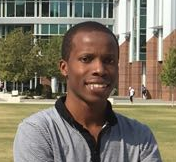

Maxwell OmwengaMaxwell Momanyi Omwenga, is a PhD candidate at The University of Tennessee at Chattanooga, United States. His research interest include Data Science, Artificial Intelligence, and Multi Access Edge Computing. Omwenga was part of the technical team that developed the Agricultural Indigenous Knowledge (AIK) OER Database. Also worked closely with graduate students to train them on how to capture and produce AIK multimedia content using smart phones.

To attend this seminar, please sign up below:
 

3 – 7 April 2017: Leapfrogging First Generation Distance Education into Fourth and Fifth Generation Distance Education at Makerere University

Presenters: Prof. Paul Birevu Muyinda, Makerere University, Uganda

Format: Asynchronous discussion from 3 April – 7 April + Live online meeting on Monday 3 April at 1 pm (South African Standard Time).

Time converter at worldtimebuddy.com

Makerere University has prioritised Distance Education as the number one strategic action for offering flexible education and increasing access to its academic offerings. The university has put in place a policy for open, distance and eLearning (ODeL) to provide a framework for mainstreaming ODeL into all programmes of study at the University. It is also mobilising resources to develop greater human and infrastructural capacity. The Distance Education Leapfrogging Project (DELP) is a project through which resources are being raised to promote online based distance education. Since 2013 the DELP has been running with the aim of increasing access to flexible blended education at Makerere University. DELP is implemented in three work packages, namely: i) Education and Training; ii) PhD and Research; and iii) Institutional Development.

DELP has resulted in a number of new developments these include the development of two (the first ever) online learning programmes as well as scholarships for Ugandans and nationals of South Sudan on the online learning programmes. Three faculty have also been provided with scholarships to complete/pursue PhD studies in ODeL.  One post-doctoral researcher is completing work on online student support. Three annual international research workshops have been held with an output of over 30 research publications in ODeL.  An online journal and international conference on ODeL are planned for 2018.

DELP has also set up physical and virtual infrastructure in addition to building greater capacity for enabling ODeL programmes and courses to be offered. An off-campus model student support centre has been established and equipped. The Project has yielded a number of outcomes including:

  • Increased capacity to enrol students on open, distance and e-learning programmes,
  • Increased ubiquitous student support; and
  • Increased integration of e-learning within conventional programmes, increased number of programmes being ‘onlinised’

Professor Paul MuyindaPaul Muyinda , is an Associate Professor and Dean of the School of Distance and Lifelong Learning at Makerere University, Uganda. He is an experienced ODeL teacher, researcher and professional. He has research interest in ICT impact evaluation, virtual education, e-learning, distance education; m-learning, online learning, blended learning, open education resources (OER); ICT4E, ICT4D and Massive Open Online Courses (MOOCs). He has researched, taught and published variously in these areas. He holds a PhD in Information Systems from Makerere University, specializing in e-learning and mlearning; a Postgraduate Diploma in Education (ICT) from the University of Cape Town, SA; a Masters in Computer Science and Application from Shanghai University, P.R. China and a Bachelor of Statistics degree from Makerere University.He has also taken the Facilitating Online Course  from the University of Cape Town.

To attend this seminar, please sign up below:
30 March 2017: Reportback on OE Global conference

Presenters: Dr Glenda Cox, OE Global programme chair, Sukaina Walji, ROER4D, Tony Carr, e/merge Africa network convenor

Format: One hour Adobe Connect live session Thursday 30 March at 12 Noon (SAST)

Time converter at worldtimebuddy.com

The Open Education Global Conference was held in Cape Town from 8 to 10 March 2017. This was a first for the African continent, welcoming the world to meet, discuss, plan, reflect, collaborate, innovate and celebrate openness in education. 2017 is the ‘year of open’ as it marks several milestones in the openness movement, including:

  • The 10 year anniversary of the Cape Town Open Education Declaration,
  • 15 year anniversary of the term “Open Educational Resources” and the
  • 5 year anniversary of the Paris OER Declaration.

In this session we will share some reflections on and learnings from this event. We invite you to a shared discussion about the implications of emerging research and practice related to openness for African Higher Education.

Links for interest:

About the conference
Conference schedule with links to abstracts and presentations
About the Year of Open Initiative

Webinar:


Dr. Glenda CoxDr. Glenda Cox ,is a senior lecturer at CILT and her portfolio includes Curriculum projects, Teaching with Technology innovation grants, Open Education Resources and Staff development. She has recently completed her PhD in Education and her research focused on using the theoretical approach of Social Realism to explain why academic staff choose to contribute or not to contribute their teaching resources as open educational resources. She believes supporting and showcasing UCT staff who are excellent teachers, both in traditional face-to-face classrooms and the online world, is of great importance. She is passionate about the role of Open Education in the changing world of Higher Education. She is also a project leader on a ROER4D sub-project on academics’ views of sharing OERs in South Africa and was the programme chair for the 2017 OE Global conference.


Professor Paul MuyindaSukaina Walji,is ROER4D’s Research Communications Advisor. Her role is to oversee the overall communication strategy both for the project’s day-to-day external and internal communications including the website and social media, as well as developing the research communications and dissemination strategy for the project’s research outputs. She works as part of the project coordination team and is supported by the IDRC-funded DECI-2 project in building understanding of the Research Communications for Development field. She is also a Researcher on ROER4D Sub-project 10.3 which is investigating how and in what ways adopting OER in and for MOOCs has an impact on educators’ Open Educational Practices. She has a Master’s degree in Online and Distance Education from the Open University (UK) and is also the Project Manager of  UCT’s MOOC Implementation Team.


Tony CarrTony Carr , is the convener of e/merge Africa and educational technologist in the Centre for Innovation in Learning and Teaching (CILT) at the University of Cape Town. Tony’s operational and research interests include online collaboration, communities of practice in staff development, online facilitation and online professional networks.


Dr. Nicola PallittDr. Nicola Pallitt , is a lecturer in the Centre for Innovation in Learning and Teaching (CILT) at the University of Cape Town and a co-convenor of the Facilitating Online course. Her professional interests include e-portfolios, badging in courses and games in learning.

This webinar has ended, please refer to YouTube video above