A significant challenge to course designers has always been to keep learners engaged and avoid feelings of isolation and detachment, which leads to high course dropout rates (Bonk & Khoo, 2014; Vakoufari, Christina, & Mavroidis, 2014). This presentation will showcase techniques online instructors can use to make learners feel connected and involved. These techniques came from research and conclusions made from two recent book chapters. The techniques will be explained, and examples will be given.
Dr. Kelly Elandercoordinates the web design and interactive media program at Harding University in Searcy, Arkansas. He holds a B.S. in Communication from Ohio University, a Master’s in adult instruction and performance technology from the University of Michigan, and a Ph.D. in instructional design for online learning from Capella University. More details about Dr. Kelly Elander here.
This webinar has ended – please find recording and resources available here.
As higher education increasingly moves to online and digital learning spaces, we have access not only to greater volumes of student data, but also to increasingly fine-grained and nuanced data’ (Prinsloo & Slade, 2017).
This session provides an introduction to learning analytics. Paul shares how this data is being used by institutions for a range of purposes and stakeholders, as well as some of the implications and ethics involved in doing so. Some universities in Africa are wondering whether or not to invest the time and resources in learning analytics, how best to make use of and how to collect it. Others are already making use of it institutionally or in specific contexts rather than at an institutional level. Paul will discuss some of his recent research, including how uses of learning analytics unfolded at South Africa’s largest open distance education provider.
The webinar encourages us to engage with the following questions:
Is bigger data better data? What evidence can such data provide and what are some of the shortcomings?
What are some of the ethical dilemmas involved in uses of student data?
Is the hype over learning analytics based on idealism rather than reality? How can we move beyond the hype of learning analytics?
Are lessons learnt from the global north about uses of learning analytics a useful starting point for educators in African Higher Education? What do we adopt and where do we adapt?
Paul Prinsloo, is a Research Professor in Open and Distance Learning (ODL) in the College of Economic and Management Sciences, University of South Africa (Unisa). His academic background includes fields as diverse as theology, art history, business management, online learning, and religious studies. Paul is an established researcher and has published numerous articles in the fields of teaching and learning, student success in distance education contexts, learning analytics, and curriculum development. His current research focuses on the collection, analysis and use of student data in learning analytics, graduate supervision and digital identity. Paul was born curious and in trouble. Nothing has changed since then. He blogs at https://opendistanceteachingandlearning.wordpress.com/ and his Twitter alias is @14prinsp
This webinar has ended, please view recording and other resources here
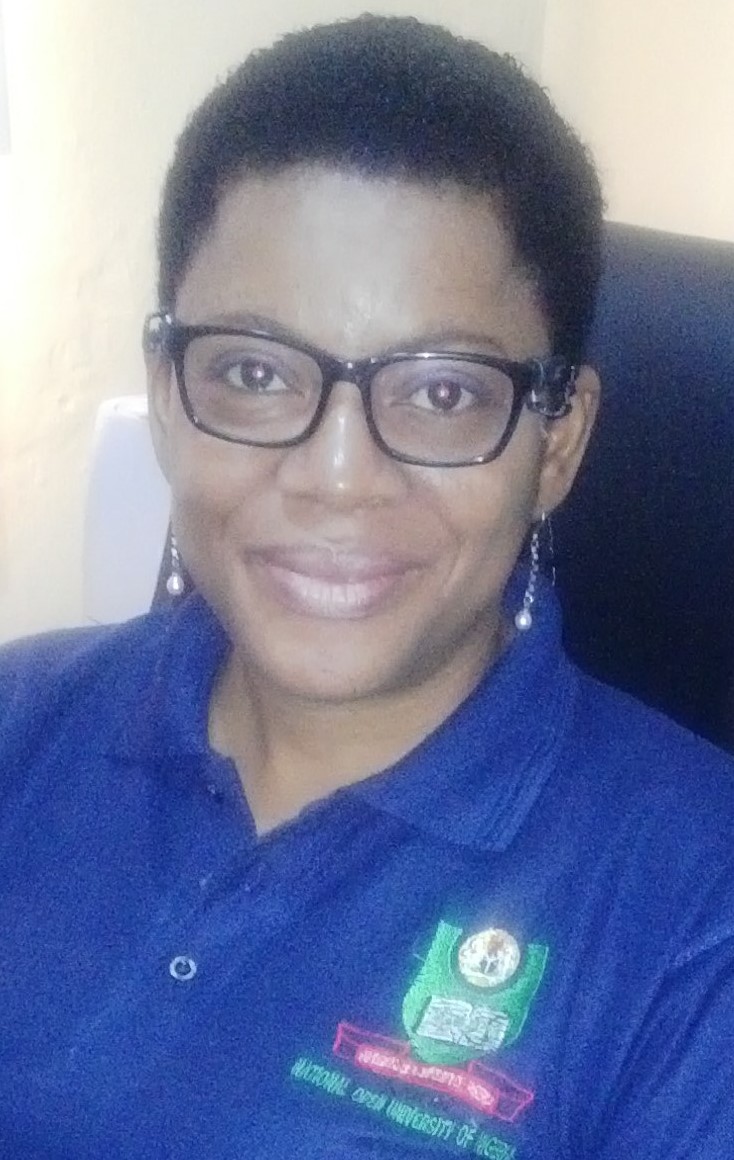
Presenter:Dr. Jane-Frances Agbu Associate Professor of Clinical Psychology & Honorary ICDE Chair in Open Educational Resources & Dean, Faculty of Health Sciences, National Open University of Nigeria
Due to technical challenges the webinar scheduled for 24 April will be postponed to a later date. If you have already signed up for this event we will inform you of a new date as soon as it becomes available. In the meantime we still encourage you to visit the seminar landing page
Format: Asynchronous discussion from 24 – 28 April + Live online meeting on Monday 24 April at 4 pm (SAST)
There is a need for African Higher Education Institutions to reflect on their position and profile with respect to the new concepts of Open Educational Resources (OER) and Massive Open Online Courses (MOOCs). Dr. Jane-Frances Agbu argues that many institutions probably will consider the benefits to outweigh the barriers. The National Open University of Nigeria (NOUN) combines its ‘classical’ openness with the new digital openness by fully embracing the OER approach and converting its complete course base into OER. NOUN is currently implementing its strategy towards becoming an OER-based Open University with a special niche for MOOCs. During a launch event in December 2015, the first 40 OER-based courses were presented as well as the first 3 OER-based MOOCs. NOUN is one of the first open universities in the world with a full-fledged OER (& MOOCs) implementation route. What have been some of the successes, challenges and lessons learned since then? Dr. Jane-Frances Agbu will discuss NOUN’s OER strategy (including sensitization, capacity building, design of NOUN 1st OER based MOOCs) and lessons learned.
Dr. Jane-Frances Agbu, is an Associate Professor of Clinical Psychology and Dean in the Faculty of Health Sciences at the National Open University of Nigeria. She is also an Honorary ICDE Chair in Open Educational Resources and has been involved NOUN’s OER strategy since 2014. She has been in open education system for the past eleven years and has contributed immensely in this sector. She is passionate about opening-up knowledge for the common good.

 Dr. Kelly Elander coordinates the web design and interactive media program at Harding University in Searcy, Arkansas. He holds a B.S. in Communication from Ohio University, a Master’s in adult instruction and performance technology from the University of Michigan, and a Ph.D. in instructional design for online learning from Capella University. More details about Dr. Kelly Elander here.