Seminar: Wrapping MOOCs for students in the global south – last day

Online seminar 29 September – 1 October 2014

Presenters: Donnalee Donaldson from Kepler Kigali and Shanali Govender from the Centre for Innovation in Learning and Teaching, University of Cape Town.

This seminar is ending today, but please come and join us. Start by viewing our seminar landing page, where we are currently hosting two narrated PowerPoint presentations by our presenters. Please also visit our discussion forum for this seminar and add your views. To post, please register on our e/merge Africa live site (free of charge and if you haven’t already done this), then sign in and look for the short cut to the discussion forum under Forum.

If you would like to receive daily updates via e-mail, please use the sign up form below.

Thank you to all who took part in yesterday’s live session with Donnalee Donaldson and Shanali Govender. In case you missed this session, the recording is available here

Initially touted as cheaper, offering better learning opportunities than traditional classes, and possibly the death of traditional higher education institutions, Massive Open Online Courses (MOOCs) generated such interest that Time Magazine labelled 2012 “The Year of the MOOC”. Since then, with more substantial research on MOOCs being undertaken, and a degree of disillusionment from the initial proponents of MOOCs, the buzz has subsided enough for us to ask ourselves some key questions about MOOCs.
Questions about MOOCs range from sweeping questions about their impact on higher education, to narrowly focused concerns about student honesty online. Underlying many of the questions asked of MOOCs are pedagogical concerns about whether we are teaching in ways that support learning for students. A prime question from the global South perspective, is how can we can best make use in our very different contexts of the resources and materials that have been made available online at no charge to the user by MOOCs mostly developed in the global North .
In conversation, from different parts of Africa, Donnalee Donaldson from Kepler Kigali, Rwanda and Shanali Govender from University of Cape Town, South Africa will present and lead discussion about their experiences of wrapping as one way of working with MOOCs.
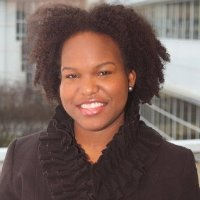
Donnalee Donaldson is a higher education administrator, instructor, and lawyer, who is interested in harnessing the power of technology to eliminate disparities in access to education. Her current focus is developing sound admissions strategies and culturally relevant instructional design at Kepler Kigali – Rwanda’s first blended learning university.
Donnalee is committed to a career in social justice and has a strong track record in the fields of education, public health, and criminal justice.She has excelled at working in the nonprofit and government sectors. She is also a gifted writer and public speaker. She has written for media outlets in the USA and Jamaica. She has been requested to speak, write, and facilitate discussions about matters related to higher education, law school admissions, legal careers and diversity. Donnalee is a proud Jamaican and global citizen.
Shanali Govender Although Shanali’s teaching experience began in secondary education, a return to higher education to pursue her own studies prompted a shift to an interest in the higher education landscape. While continuing to work in the field of staff development at the University of Cape Town, she is working towards her PhD, looking at discourses in the learning experiences of first year engineering students. Her particular brief in the staff development team is to support part-time and non-permanent teaching staff. She is responsible for running the s.e.a.TEACH (supporting emerging academics Teach) programme and works within departments and faculties on request. She has also facilitated a number of wrapped MOOCs, targeting UCT postgraduate students.


Inclusive Design of e-Learning Environments: A Global Agenda

Our current seminar on “Inclusive Design of e-Learning Environments: A Global Agenda” which run from 25-29 August. The seminar is led by Professor Denise Wood, Professor of Learning, Equity, Access and Participation at Central Queensland University, Australia.

Please note: Professor Wood will be hosted an Adobe Connect live meeting Monday 25 August at 2:30 pm (SAST/GMT+2). The recording is available here and if you have not yet joined the conversation on Facebook, this can be done here.

Professor Wood will discuss the complexities of using digital technologies to engage students from diverse backgrounds. This presentation argues that ‘inclusion’ is a highly contestable concept and that despite the rhetoric, the move towards standardisation of inclusion, access and equity through institutional policy has ‘reterritorialized difference’ leading to a focus on ‘management of, rather than engagement with, difference’.

For the goals of inclusive education to be realised, as Denise Wood argues, there is a need for a more nuanced understanding of the dimensions required for education, and e-learning environments in particular to be inclusive of the diverse needs of our student population.

The four dimensions of accessibility; usability; personalisation and transformative pedagogical practice will be explored with examples of application in practice.

Denise Wood’s research with community organisations and national and state governments in Australia and South Africa focuses on the potential of new media technologies such as participatory Web 2.0 and 3D virtual learning environments to enhance the educational and social participation of young people with disabilities, as well as exploring the pedagogical potential of these environments to engage learners in the higher education context.

To receive e-mail updates and other messages relating to this seminar, please go to the signup page

Denise Wood is Professor of Learning, Equity, Access and Participation at Central Queensland University. She also holds an Adjunct Professorial position in the Faculty of Education at the University of the Western Cape, South Africa. Her qualifications include a PhD (Education), Master of Educational Technology, Master of Design, Graduate Certificate in Flexible Learning, Graduate Diploma in Social Sciences and a Bachelor of Arts in Social Work. Denise’s research focuses on the use of accessible information and communication technologies (ICTs) to increase social and educational participation, as well as the pedagogical benefits of social media in teaching and learning.

Live panel: MOOCs and Online Course Design – Michael Rowe, Janet Small and Sukaina Walji

What can designers of online courses learn from MOOCs? What can designers of MOOCs learn from the experience of a small credit bearing course that is also available to all? These and other related topics will be raised in this live panel Adobe Connect session on Tuesday 19 August at 11 am (SAST/GMT+2). Bring your own experiences, insights and questions!

Michael Rowe is a Physiotherapy lecturer at University of Western Cape, South Africa with a particular interest in online and blended teaching and learning. In 2013 Michael created and ran two credit bearing modules in physiotherapy as open online courses. Michael has kindly agreed to talk a bit about the challenges faced in creating and leading his courses. He will be joined by Sukaina Walji and Janet Small from University of Cape Town’s MOOC implementation team.

Thank you to those of you who joined this session! The recording of this session is available here

To let us know that you will come to this this free live session, please use our signup form.

Dr. Michael Rowe is a physiotherapy educator at the University of the Western Cape, South Africa interested in the use of emerging technologies to facilitate new teaching and learning practices in undergraduate education.
Sukaina Walji is based at the Centre for Innovation in Learning and Teaching (CILT). She is a member of the MOOC Task Team with a remit to research and develop strategies for institutional engagement with MOOCs. Her other projects include Research Communication strategy for the Research in Open Educational Resources for Development in the Global South (ROER4D) and Online Learning Design. She has an Honours degree from Oxford University and a Masters in Online and Distance Education from the Open University (UK).
Janet Small is a course developer based at the Centre for Innovation in Learning and Teaching (CILT) at the University of Cape Town. She is a member of the CILT MOOC Task Team. Janet is involved in curriculum and course design for blended and online courses in higher education – in a range of contexts from formal credit-bearing to less formal co-curricular and professional development. She has a Masters Degree in Adult Education from the University of Cape Town.