20 July: Personal mobile devices in the classroom: opportunities and challenges

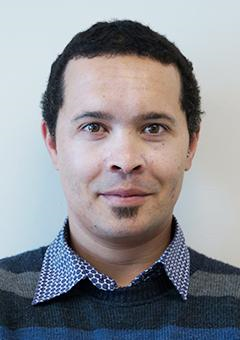
Presenters: Dr. Cheryl Brown, Senior Lecturer, Centre for Innovation in Learning and Teaching, University of Cape Town & Genevieve Haupt, Research Officer, Centre for Innovation in Learning and Teaching, University of Cape Town

Format: one hour webinar Thursday 20 July, 1pm SAST

Time converter at worldtimebuddy.com

Personal mobile devices (PMDs) such as smart phones and tablets are an important part of students’ media ecologies. PMDs share some similarities with laptops, such as wireless Internet connectivity and relying on a battery to run. However, whereas laptops run on software that is pre-installed, PMDs run on software that is installed by downloading apps. This boundary between them is becoming increasing blurred as light-weight laptops that are touchscreen and support traditional software in addition to apps are becoming more commonplace and affordable. Such devices are making a profound impact in university settings worldwide, both inside and outside of the classroom. Despite this, laptop and tablet initiatives are still relatively novel across a range of South African higher education institutions.

Does access to Personal Mobile Devices (PMDs) such as laptops, tablets and smartphones) improve student learning experiences?

Access to physical devices is often perceived as a solution to pedagogical issues facing African Higher Education Institutions, but research suggests that we need a more nuanced understanding of the role of PMDs to leverage its usefulness for teaching and learning purposes.  

Cheryl will talk about research emerging from the UCT flexible learning “laptop” project and DHET Personal Mobile Devices (PMD) project. She will focus on lecturers’ experiences of how they have changed their teaching practices in the classroom as a result of increased student access to devices as well as some of the challenges experienced and how they were overcome.


Dr Cheryl Brown is a Senior Lecturer and part of the Learning Technologies Team. She joined UCT (CET) in 2003 having previously worked in the area of e-learning in Australia. She is principle investigator for the Carnegie funded “Developing Educational Technology Professionals in Africa” project and the DHET funded cross institutional “Personal Mobile Devices” project. She heads the Commonwealth Digital Education Leadership Training in Action (C-DELTA) project. Cheryl co-convenes the Masters and Postgraduate Diploma in Educational Technology  and convenes courses in research and evaluation of emerging technology and emerging technologies and educational practices. She supervises MEd and PhD students from across Africa. She is co-chair of the Apereo Teaching and Learning Innovation Awards (ATLAS) which recognise innovation in learning and teaching internationally. Cheryl is an NRF rated researcher and her interests centre around access to ICTs and how they facilitate or inhibit students’ participation in learning. In the past few years she has looked more closely at the role technological devices (for example cellphones and laptops) play in students learning in a developing context and the development of students’ digital literacy practices. Cheryl is a long standing member of the CHED Transformation Committee and is currently chair of the CHED Research Ethics Committee.


Genevieve Haupt joined the Learning Technologies Team within CILT in September 2015 as a part-time project manager and researcher on the DHET/UCT Personal Mobile Device Project. As she worked in the Education and Skills Development Unit at the Human Sciences Research Council from 2009-2015, her research career has focused on various issues within Higher Education. Whilst at the HSRC she completed her Master’s degree in Research Psychology with the University of the Western Cape and has subsequently registered for a PhD in Higher Education Studies with Rhodes University. The provisional title of her PhD is: A legitimation code theory analysis of access into the Master’s in Clinical Psychology programme across the Western Cape. Her Master’s, and now her PhD has a strong focus on issues of social justice and social equality in Higher Education. Despite having a background completely unrelated to the field of Learning Technologies, she welcomes the challenge and looks forward to unpacking the various issues of using technology in higher education institutions.


This webinar has ended – please view resources here

13 July: Innovative pedagogical approaches for blended learning at the University of Namibia: Flipped Classroom


Presenters:
Dr. Maggy Beukes-Amiss, Director at the Centre for Open, Distance and eLearning (CODeL) University of Namibia and Mr Andre Joubert, Coordinator; Digital Media, Centre for Open, Distance and eLearning (CODeL)

Format: One hour webinars Thursday 13 July at 1 pm (SAST)

Time converter at worldtimebuddy.com

The advent of new technologies in education for teaching and learning activities is not without challenges. One of these challenges is the pitfall of using new technologies without adding much value to the teaching and learning process. Using Dr. Ruben Puentedura’s SAMR Model, this challenge involves using technology to simply substitute for what has always been done before technology came into the equation. This results in mere enhancement of the teaching and learning activities.

For technology to add value to the teaching and learning processes, it should have a transformative impact. In its effort to maximise the impact of technology at the University of Namibia, the Centre for Open, Distance and eLearning (CODeL) opted to adopt blended learning using the Flipped Classroom approach. Flipped Classroom involves inverting the teaching process whereby teaching content is delivered prior to class time so that student activities take place in the classroom.

This webinar describes how CODeL utilises a lecture capturing tool called Panopto to implement the Flipped Classroom blended learning approach. The webinar seeks to answer the following questions:

  1. How does the learning context of the University of Namibia render itself to the Flipped Classroom approach?
  2. What are the opportunities and challenges that educators and students face regarding online and blended learning at the University of Namibia?
  3. What lessons has CODeL learned from initial Flipped Classroom implementation?

Dr Maggy Beukes-Amiss is a Namibian with over 20 years’ experience in teaching Library and Information Science as well as ICT related subjects at the University of Namibia, within the Department of Information and Communication Studies. She has a PhD in Computer-integrated Education (CiE) through the University of Pretoria, South Africa. She served as Head of Department (2005-2007) and again for another three years (2012-2014). Currently she is the Director of the newly established Centre for Open, Distance and eLearning (CODeL) at the University of Namibia. She is also a Council member of the University of Namibia, the highest decision making body of the University.

She is particularly passionate about eLearning capacity-building activities through the use of open source software packages and research focusing on eLearning technologies and activities. She is a member of the eLearning Committee of the University of Namibia and used to serve on the Namibian Open Learning Network Trust (NOLNet) eLearning Committee as Coordinator of eLearning activities within the entire country for over seven years, until 2011. She has been involved in a number of eLearning capacity-building activities in Namibia and various countries in Africa on behalf of NOLNet, GIZ and GESCI.

She served as Chairperson of the eLearning Africa 2013 Local Organising Committee and is a reviewer of conference papers for eLearning Africa and Online Educa Berlin, on behalf of ICWE GmbH, Germany, 2011 to date. She is a certified ICDL trainer (2007) and an Expert of New Learning Technologies (2005) through TeleAkademia of Furtwagen, Germany.

She has served as an ICT Steering Committee member of the ICT Steering Committee of the Ministry of Education in Namibia since 2005 and in addition, has been the Deputy Chairperson of the ICT Steering Committee since 2012. She was a contributor of the national ICT Policy and implementation plan, Tech NA!. She was a Commissioner and then Chairperson of the Board, of the regulator Namibian Communications Commission (NCC), 2006-2011. She was also appointed as the country’s eminent e-Content expert through the World Summit Award (WSA), from 2006 to date. She served as a Technical Quality Assurance Committee (TeQAC) member for the African leaders in ICT (ALICT) blended learning programme of GESCI, as well as the etutor-coordinator (training and coaching) e-tutors of the ALICT programme, 2011-2014. Another highlight in her career path is that she was the Chairperson of the Telecom Namibia Board for a 3 year period until September 2016. She has recently (April, 2016) been rewarded as “GIZ Ambassador for quality in Digital Learning”.


Mr. Andre Joubert is a Namibian with 7 years’ experience in Advertising and Multimedia workflows. He has a BA degree in advertising from the University of Namibia. Currently, he is the Coordinator: Digital media at the Centre for Open, Distance and eLearning (CODeL) at the University of Namibia. Andre and his team are also tasked with the campus wide roll out of Panopto, a lecture capture software which allows lecturers to record content for their courses, anywhere, anytime.


This webinar has ended – please view this site for past resources

19 June: Facilitating student learning through e-Assessment processes and practices – Webinar 2


Presenter:
Associate Professor Alan Cliff, Centre for Innovation in Learning and Teaching (CILT), University of Cape Town

Format: Two one hour webinars Monday 12 June and Monday 19 June, both days at 1 pm (SAST)

Second webinar:

Time converter at worldtimebuddy.com

This two-part seminar will focus on the contemporary affordances and challenges of assessing students and student work in the online learning environment.

The first part (recording available here) will focused on the overarching issues that are and should be of interest to us all:

  • The higher education environment and the need for e-learning
  • The extent to which online environments can support and provide the enabling conditions for e-learning and e-assessment
  •  The extent to which online environments support or interact with contemporary online teaching and learning issues, such as the ‘unbundling’ of higher education teaching and learning and the offerings of private higher education online learning providers

The second part will focus on e-assessment practices and address the following questions:

  • ‘Doing assessment’ online – is it a case of transferring face-to-face assessment to an online environment?
  • The affordances and challenges of online assessment – a continuum from formative to summative assessment?
  • Online assessment practices – issues of purpose; format; grading; feedback; teaching and learning

Alan Cliff is an Associate Professor and co-ordinator of the Staff Development cluster at CILT. He teaches courses in educational psychology, educational assessment and adult education to mostly postgraduate education students and convenes courses in educational assessment and evaluation for students at certificate, diploma and master’s levels. Alan has supervised master’s and PhD students in areas such as the development of literacies practices in disciplinary contexts; the validation of standardised admissions tests; the use of alternate admissions tests for admission and placement purposes; and factors that facilitate the development of electronic systems literacy in the workplace. As co-ordinator, Alan contributes to work on alignment between curriculum and student assessment, with new and established academics and professional staff. Regionally, Alan teaches courses on assessment design and academic literacy. His current research interests are in the use of theories and principles of Dynamic Assessment to facilitate student learning; and in the processes of staff development as ‘literacies practice’ and induction into professional learning communities. Alan contributes to the development of educational assessment policy in the further and higher education sectors nationally.

This seminar has ended. For resources and webinar recordings please refer to the resource page.