Emerging Technologies Redesigning the Distance Learning Environment at Makerere University

9 November – 13 November 2015

Towards the middle of November Michael Walimbwa from the Makerere University will convene this seminar on the impact of emerging technologies on distance education and how new technology opens for opportunities for re-thinking traditional distance education. Please notice on Monday 9 November at 1 pm (GMT+2/CAT)  Michael will host an Adobe Connect Online Live session.  As Michael will be in Cape Town we welcome all to also join us physically at the CILT department, Upper Campus, University of Cape Town for this session

Summary:
New forms of teaching and learning with emerging technologies require new spaces and building capacity to effectively operate in the same spaces. Distance Education Leapfrogging Project (DELP) is helping to facilitate emerging models in distance education, like the flipped classroom, by rearranging learning environments to accommodate more active learning. The project is helping in redesign of spaces to facilitate project-based interactions with attention to mobility, flexibility, and multiple device usage. Wireless bandwidth is being upgraded to create “smart rooms” that support web conferencing and other methods of remote, collaborative communication. Large displays and screens are being installed to enable collaboration on digital projects and informal presentations. The change is based on the premise that as distance education continues to move away from traditional lecture-based face-to-face programs to more hands-on scenarios, university classrooms need to start resembling real-world work and social environments that facilitate living interactions and cross disciplinary problem solving.
Traditional classrooms are being transformed to accommodate new pedagogies; instead of the traditional rows of chairs with writing surfaces facing a podium, DELP intends to create a more dynamic classroom layout, with seating arrangements that foster collaboration and teamwork. However this is not coming easy as many challenges stand in the way

This session has ended – resources are available on the seminar landing page
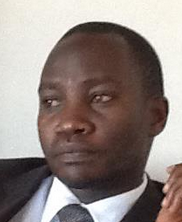
Michael Walimbwa  is a lecturer at Makerere University in Uganda. His main interest are in Computer Assisted Pedagogy at all levels and Technology Enhanced learning. His specialties include Technology Enhanced Learning, Computer Assisted Instruction and Educational Technology. He is currently pursuing a PhD at the University of Cape Town, South Africa.


In search of a sustainable model to facilitate access and use of ICT in rural Mpumalanga schools, South Africa

2 – 6 November 2015
A one week Peer-Assist on facilitation models for for access and usage of digital technologies in deep-rural educational settings With Dr. Alice Barlow-Zambodla
As we have seen in previous events for e/merge Africa eLearning and the use of digital hardware has become widespread in most African higher educational institutions. Although many challenges are faced in terms of pedagogy, organisational and to a lesser extend technically many university campuses are often located in areas where infrastructure provides access, both physically and technically.
In this seminar we will consider access and usage models in a deep rural district in South Africa. Our coordinator for East and Southern Africa Dr. Alice Barlow-Zambodla is currently offering her services as a volunteer for the Buffelhoek Trust as a part of a CSI programme of major cell phone service provider. In a rural district covering more than 50 km2 Alice advises on digital usage and access at 3 high schools and 6 primary schools located in Bushbuckridge in the rural province of Mpumalanga, South Africa.
During this week Alice will share her experiences and challenges encountered as well as opening up for a much broader conversation on how to facilitate access and use of digital technologies in this context.

During this week we will deviate slightly from our usual format and ask directly for your input and present this as a peer-assist like format, where Alice will present her case and invite for your direct input. We have planned to have host two online-live sessions – On Monday 2 November at 1 pm (GMT+2/CAT) Alice will present her case then receive questions for further clarifications of her case. During the week we will continue the conversation in our site discussion forum and on Wednesday 4 November at 1 pm (GMT+2/CAT) Alice will host another online live session where you can act as a peer to share your thoughts in conversation with Alice. Please get involved and assist Alice! Please join by using the form below.

Dr. Alice Barlow-Zambodla has a multi-disciplinary background in agriculture (crop science), plant physiology and ICTs in Education. She is also Regional Coordinator for e/merge Africa for Southern and Eastern Africa. Previously she worked as a Programme Specialist for the South African Institute for Distance Education (Saide) where she worked in the field of Research and Development in Education with a special focus on the design, development and implementation of distance learning programmes for rural communities; other specialites also include the use of ICTs in Education, as well as the monitoring and evaluation of educational interventions.

Please notice that this even has ended – resources will remain available on the seminar landing page

Social Media Adoption by Nigerian Universities – How have they fared?

Please notice new dates: Monday 12 October – Friday 16 October 2015

This is a one week seminar and our programme for the week will look the following:
Monday 12 October: We will provide access to a landing page on our live-site with presentation resources and a discussion forum.

Wednesday 14 October: Olufemi Oludodun will host a one hour online live session via Adobe Connect, where Olufemi will give a 30 minute presentation with a subsequent opportunity to ask questions and engage with our presenter. We have scheduled this session for Wednesday 14 October at 1 pm (Central African Time): This is:

11 am in Accra
12 pm in Abuja
1 pm in Cape Town
2 pm in Nairobi

More information on how to join this live session via Adobe Connect will be provided soon.

Friday 16 October: Last day of the seminar. Landing page and discussion forum will remain open beyond this week.


Olufemi Olubodun

The increasingly pervasive use of social media has changed the ways that individuals and institutions relate, communicate and share knowledge, with both positive and negative effects. In order to enhance their online visibility and presence universities have focused on a few large social networks. This study by Olufemi Olubodun Assistant Chief Technologist in the Faculty of Dental Sciences at University of Lagos, Nigeria, examines the presence, usage and visibility of social media on Nigerian university websites. The social media sites of institutions in Nigeria were compared to those of institutions in Europe and America in order to answer questions about the use, impact and prospects of social media such as Facebook, Twitter, YouTube, Google+, and LinkedIn.

This seminar has ended, please refer to the seminar landing page