25 May: Understanding lecturer’s adoption of OER: a multi-factorial approach

Seminar series: Growing Open Educational Practices in Africa SEMINAR 2
Presenter: Dr. Glenda Cox, Centre for Innovation in Learning and Teaching, University of Cape Town

Format: One hour webinar Thursday 25 May, 1 pm (SAST)

Time converter at worldtimebuddy.com

The Research on Open Educational Resources for Development (ROER4D) project aims to provide evidence-based research from a number of countries in South America, Sub-Saharan Africa and South / South East Asia. The research referred to in this presentation is from one of 18 sub-projects from 26 countries that aims to redress the current imbalance where so much research on OER is from the Global North. The primary objective of the programme is to improve educational policy, practice, and research in developing countries by better understanding the use and impact of OER. I conduct research in one of the programme’s sub-projects, focusing – with my colleague Henry Trotter – on OER in South Africa. For more information, see: http://www.roer4d.org

This study analyses the barriers and enablers of OER adoption at three South African universities, in order to better understand why South African lecturers adopt – or do not adopt – OER. Based on interviews with 18 lecturers at the universities of Cape Town (UCT), Fort Hare (UFH) and South Africa (UNISA), this qualitative study focuses on lecturers’ teaching practices as they relate to (potential) open educational activity. To do this, the study developed and utilised three key analytical frameworks and concepts for assessing and comparing OER (in)activity at the universities. These frameworks will be introduced in the session and there are links below to a poster and a article that elaborate on our approach.

The interviews revealed some insights into the open practices of some academics but mostly they revealed a lack of open practice. This lack of open practice will be explained by using the developed tools that look at institutional readiness. There are also interesting personal motivations and concerns about sharing and using OER that will be outlined.

At the end of the sessions participants will have some practical knowledge of tools to look at OER readiness and some questions to think about when starting out or researching OER and Open Educational Practices (OEP).

Links and articles for interest:

Trotter, H. & Cox, G. (2016) The OER Adoption Pyramid. Presentation at Open Education Global 2016. 12-14 April 2016: Krakow, Poland. Retrieved from http://open.uct.ac.za/handle/11427/18936
Data available: https://www.datafirst.uct.ac.za/dataportal/index.php/catalog/555/related_materials
Journal publication:
http://www.irrodl.org/index.php/irrodl/article/view/2523
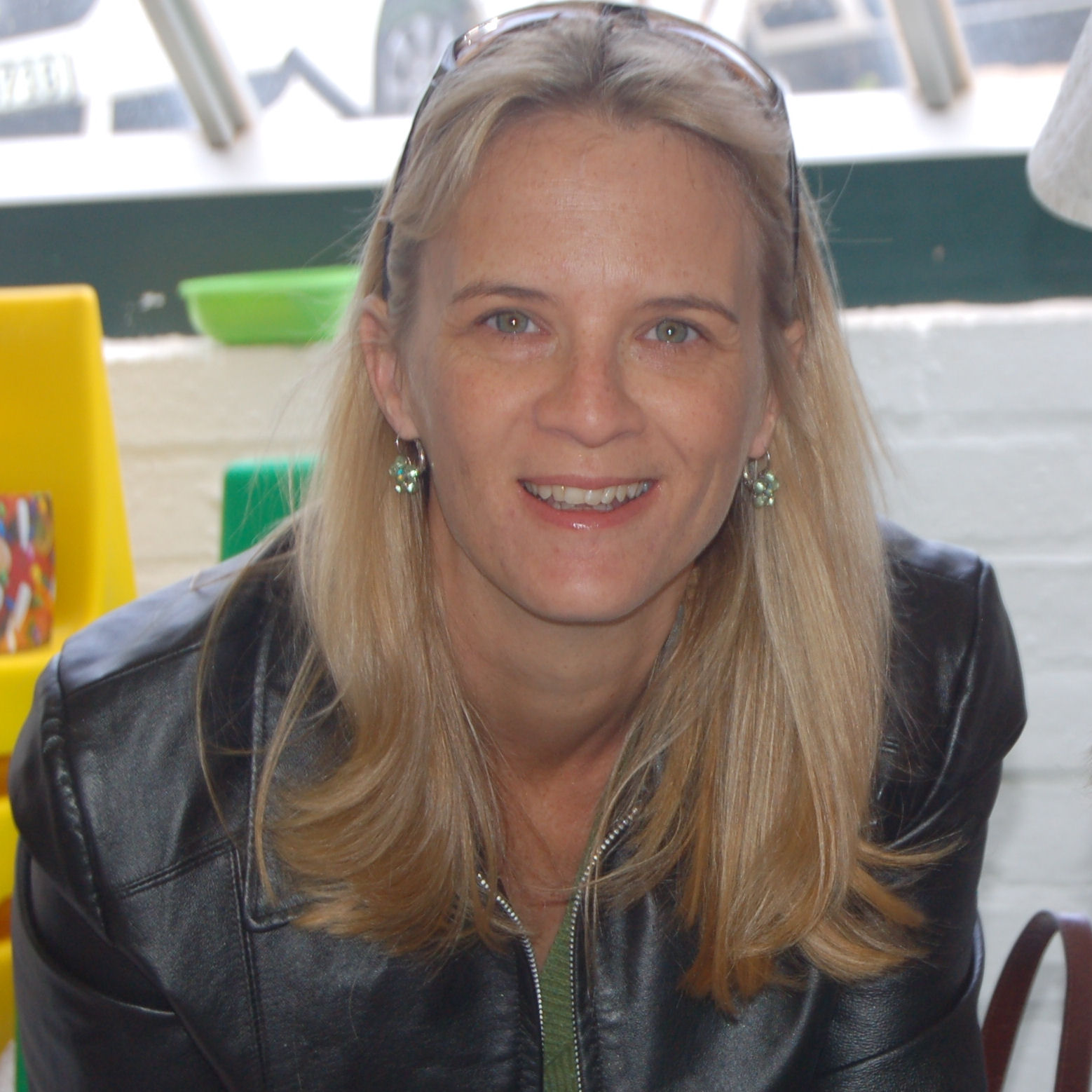

Dr Glenda Cox is a senior lecturer at CILT and her portfolio includes Curriculum projects, Teaching with Technology innovation grants, Open Education Resources and Staff development. She has recently completed her PhD in Education and her research focused on using the theoretical approach of Social Realism to explain why academic staff choose to contribute or not to contribute their teaching resources as open educational resources. She believes supporting and showcasing UCT staff who are excellent teachers, both in traditional face-to-face classrooms and the online world, is of great importance. She is passionate about the role of Open Education in the changing world of Higher Education.

This seminar has ended – recording is available here!
 

23 May: Open Educational Practices (OEP) for teaching in higher education

Seminar series: Growing Open Educational Practices in Africa SEMINAR 1
Presenter: Catherine Cronin, Centre for Excellence in Learning & Teaching (CELT), National University of Ireland, Galway

Format: One hour webinar Tuesday 23 May, 1 pm (SAST)

Time converter at worldtimebuddy.com

Open educational practices (OEP) is a broad descriptor of practices that include the creation, use and reuse of open educational resources (OER) as well as open pedagogies and open sharing of teaching practices. As compared with OER, there has been little empirical research on educators’ use of OEP for teaching in higher education. Catherine’s research addresses this gap, exploring the digital and pedagogical strategies of university educators, focusing on whether, why and how they use open educational practices for teaching.
Catherine’s research was conducted at one European university based on semi-structured interviews with educators across multiple disciplines. Using a constructivist grounded theory approach, she found four dimensions shared by open educators: balancing privacy and openness, developing digital literacies, valuing social learning, and challenging traditional teaching role expectations. She argues that the use of OEP by educators is complex, personal, and contextual; it is also continuously negotiated. Her findings suggest that research-informed policies and collaborative and critical approaches to openness are required to support staff, students, and learning in an increasingly complex higher education environment

This online event invites us to discuss and consider the following (among other) questions:

  • Why and when might  educators and educational technology practitioners choose open, and why not?
  • In our contexts, how can we balance personal choice (regarding openness) with  institutional and other constraints?

How can we grow open educational practices in African Higher Education?

Links and articles for interest:


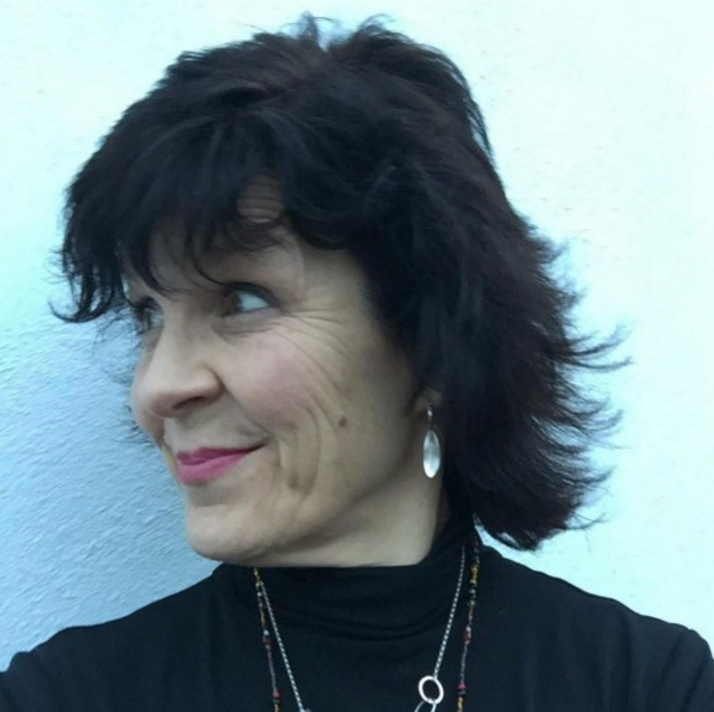
Catherine Cronin is an educator, researcher and PhD candidate at the National University of Ireland, Galway. Her work focuses on openness and open education, digital identity practices, and exploring the boundary between formal and informal learning. She is currently completing her PhD exploring the use of open educational practices (OEP) in higher education. Catherine has been involved in teaching, research and advocacy in higher education and in the community for over 25 years. Catherine advocates a critical approach to openness; she is a regular contributor to conversations and collaborative projects in the area of open education, within Ireland and globally.

This webinar has ended – recording available here

12 May 2017: Exploring the interface between learning design and evaluation

Presenter: Carmel McNaught, University of Johannesburg, South Africa &  David Kennedy, First Connexions, Hong Kong

Format: Two hour Adobe Connect live 11 am – 1 pm (SAST) via Adobe Connect from the University of Cape Town, South Africa (With possible interaction with presenters via text chat)

Time converter at worldtimebuddy.com

As educators we are designers of learning processes and resources. However, educators are often overwhelmed with the choice of technologies for supporting student learning and what is meant by learning designs with more student-centred pedagogies; terms such as blended learning, flipped learning, student-generated content, etc. can seem off-putting and unhelpful. Learning designs can only be effective when one thinks about (and eventually answers) the questions: How do I expect that this choice of learning design will support students in their learning? How do I know that the learning design was effective? So, evaluation and learning design are tightly intertwined. In this seminar we will unpack what is meant by designing for learning and explore what is involved in scholarly evaluation of learning designs, illustrating the talk with examples from projects involving mobile technologies and ePortfolios; and also those where groupwork, peer review and peer assessment are essential to the learning design, especially for large class sizes. Our examples will come from a range of discipline areas: English language, Social Geography, Business and Chemistry.


Carmel McNaught is a Distinguished Visiting Professor in the Learning Technologies Unit of the Department Science and Technology Education in the Faculty of Education at the University of Johannesburg. Carmel is also an Emeritus Professor of Learning Enhancement and former Director of the Centre for Learning Enhancement and Research (CLEAR) at The Chinese University of Hong Kong. Before that she was Head of Professional Development in Learning Technology Services at RMIT University, Melbourne, Australia. She has previous experiences in southern Africa at the University of Zimbabwe and University of KwaZulu Natal. She has worked in the fields of chemistry; science education; second-language learning; learning design; and curriculum, policy, and quality-assurance matters in higher education. She has served on the editorial boards of 18 international journals; and is a prolific author with over 350 academic publications. Since 2012, she has been a higher-education consultant, working mostly in Africa, Australia, Hong Kong and other countries in Asia, New Zealand, the UAE and the UK.


Dr David M KennedyDr David M Kennedy has held a number of senior positions in universities in four countries and consulted in an additional 16 countries. Most recently he was Executive Director: Teaching and Learning at the Higher Colleges of Technology in the UAE, Professor and Deputy Dean: Teaching and Learning at James Cook University (Singapore), Associate Professor and Director of the Teaching and Learning Centre, Lingnan University and Programme Director at the University of Hong Kong. His work has included professional development in teaching and learning, research training, and programme and course design. He has also led and contributed to numerous strategic institutional initiatives involving quality assurance, accreditation and programme reviews, and reviews of institutional IT to support Teaching and Learning. He has published >100 academic research papers/ reports, which focused on innovation in the use of ICTs in T&L in multiple academic disciplines, including Education, Medicine, Language learning and Business. Prior to entering higher education he was Head of Science at two private colleges for almost 10 years. He is currently Managing Director, First Connexions, which focuses on supporting teaching, learning and quality matters in higher education.

This seminar has ended – recording is available here